
UX & product design
with a point of view.
Make flows, interfaces and everyday interactions clearer for people.
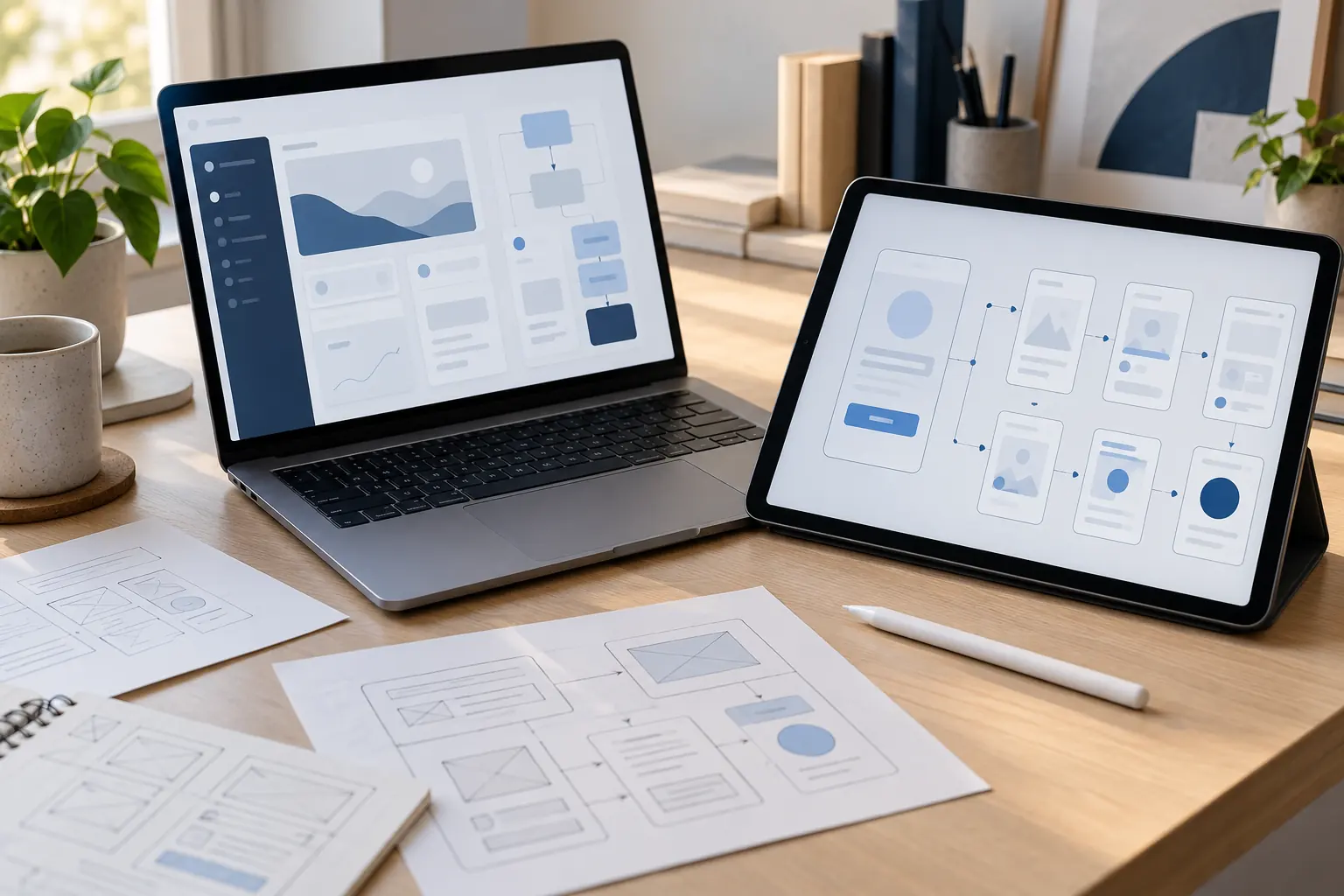
Map a User Flow Before Drawing Screens
Build a useful user flow around entry points, decisions, recovery, and completion so your team can agree on product behavior before drawing screens.
Recruit Participants Who Can Inform Your Design
Create a focused research recruitment plan using recent behavior, relevant contexts, accessible participation, and clear screening questions for product design.
Write Usability Test Tasks That Do Not Give Away the Interface
Write realistic usability tasks that describe a user goal, avoid interface clues, and reveal whether people can find and complete important product actions.
Design Forms for Correction and Completion
Plan product forms with clear labels, sensible grouping, useful validation, preserved input, and recovery paths that help people complete the task confidently.
Plan Keyboard Access Across a Product Workflow
Review keyboard access through real product tasks, including focus order, visible focus, dialogs, errors, and returning to the right place after an action.
Organize Information Architecture Around User Tasks
Create product navigation and information architecture using user tasks, content inventory, understandable labels, and tests that reveal where people expect to look.
Specify Empty, Loading, and Error States Together
Design empty, loading, and error states as a connected product experience, with clear causes, appropriate next actions, preserved context, and realistic recovery.
Design Responsive Workflows Beyond Breakpoints
Plan responsive product behavior around tasks, content priority, input methods, and recovery, then review complete workflows at small and large viewport sizes.
Create Design Tokens with Clear Product Roles
Define design tokens by purpose, document semantic roles and component mappings, and introduce changes that preserve readable, consistent product interfaces.
Write a Design Handoff That Explains Behavior
Prepare a design handoff with product rules, interaction states, content, responsive decisions, and acceptance criteria so implementation preserves the intended workflow.
Choose Prototype Fidelity for the Question You Need to Answer
Choose low or high fidelity prototypes based on the decision, interaction risk, and test context, while recording limitations that could affect research findings.
Design Dense Tables Around the Decision People Need to Make
Design product tables with meaningful columns, clear row identity, useful sorting and filtering, accessible actions, and responsive alternatives for real decisions.
Prioritize Design Findings by Task Impact
Turn research observations into design decisions by separating evidence from interpretation, assessing task impact, and choosing focused changes with clear verification.
Why a design system matters earlier than you think
Start a practical design system with semantic foundations, repeated components, accessible states, clear usage guidance, and lightweight ownership as the product grows.
Build it. Brand it.
Bring it to market.
From product development to brand strategy and launch marketing, let’s find the right next step for your idea.